Allen · Dallas · Plano · McKinney and nearby
Fire Pit Contractor for Allen and Dallas Backyards
The fire pit is often the line that blows up a backyard budget, and the one people second-guess most. "Had I known the pit would cost that much extra, I would've skipped it," one homeowner wrote. Before you build one in Allen or Dallas, settle three things: wood or gas, how far it has to sit from the house under your city's rules, and what lines the ring so the stone doesn't crack in the first season. Call (469) 283-6279 and we'll connect you with a fire pit and hardscape pro serving your area. Ask them to check the fire marshal's distance and your HOA's rules before anything is poured. Those two calls take about five minutes.
Last updated October 23, 2026
If this sounds familiar
"It cost more than the patio"
You priced a patio, then a built-in pit, then a gas line, and the pit became the biggest number on the quote. Get the pit priced as its own line, wood and gas side by side, so you can choose with both numbers in front of you.
"The HOA sent a letter"
The pit went in and then the HOA, or a county burn ban, said no open flame. Some HOAs won't allow a visible flame at all. A five-minute call to the HOA and the city's fire marshal before you sign settles it.
"The ring cracked after one winter"
Concrete and some natural stone crack when they get "super hot like fire pit hot." Flagstone and bluestone next to the fire are the usual casualties. A fire brick liner inside the ring is what stops it.
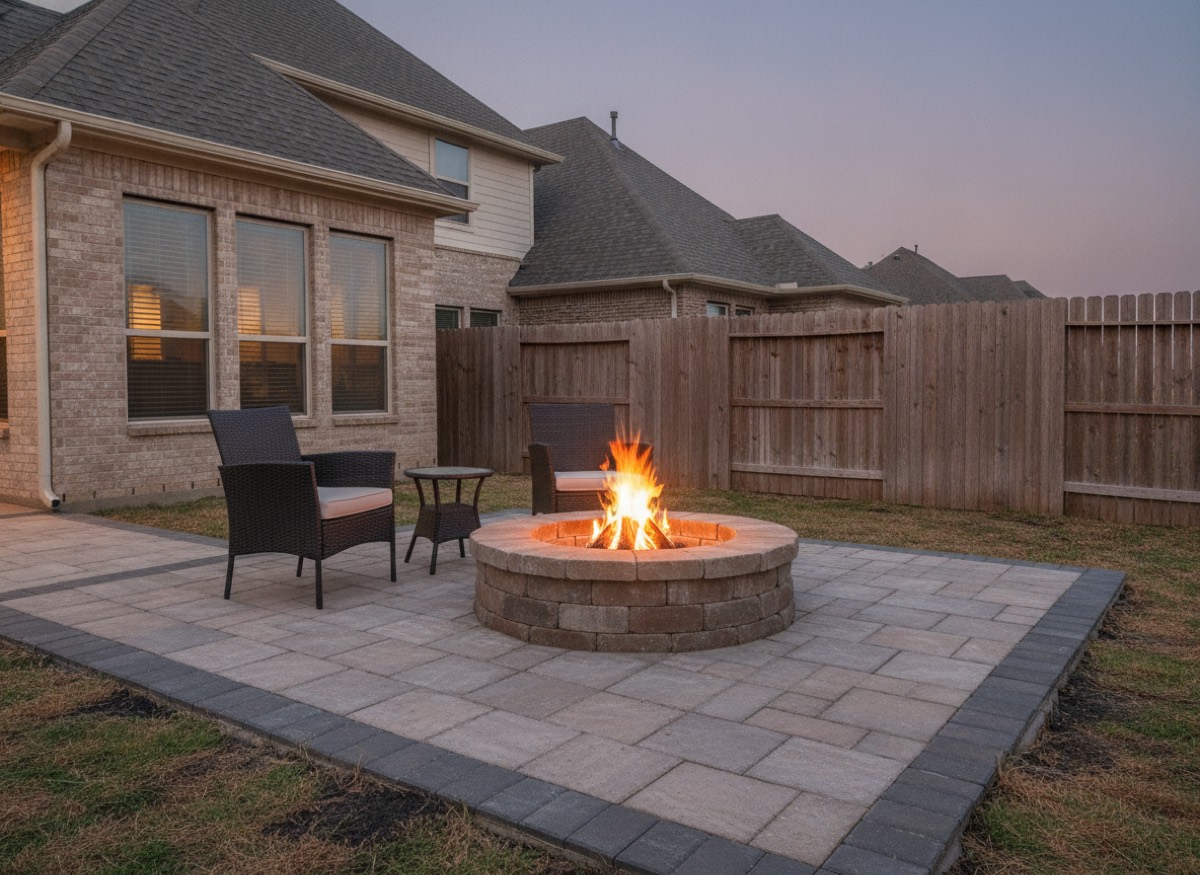
Wood or gas: which one you'll still be using in three years
- Wood gives the warmth and the crackle. It also gives smoke, and in a neighborhood of close lots the smoke goes where the wind goes: "Every time we use it we get smoked out." Wood is also what a burn ban stops.
- Gas (natural gas or propane) lights with a switch, makes "no meaningful smoke," and is often allowed closer to the house. It isn't as warm as a big wood fire. A natural gas line means a trench to the pit, so ask whether your city wants a permit for it.
- Is a built-in worth it? If you'll use it at least twice a month and you're staying in the house for a few years, a built-in pit usually earns its cost. If not, a portable propane fire table might be all you need.
How far from the house, and who decides
There isn't one number for every city here. Rules around Dallas run from about 10 feet to 25 feet:
- The base International Fire Code that many cities start from keeps a recreational wood fire 25 feet from a structure or anything that burns.
- Frisco lists 10 feet for a permanent fire pit.
- Highland Park sets 15 feet from a house and 10 feet from a property line.
- Allen has adopted the 2021 International Fire Code with local amendments. Call Allen Fire at 214.509.4400 for its current distance.
Read the city-by-city rundown, including what to measure besides the house.
- Gas pits and built-in fireplaces are often treated differently from wood.
Then check the HOA, which can be stricter than the city. And remember a county burn ban can stop wood fires even when your pit is legal.
Paying for it without getting ghosted
Some of the worst threads have nothing to do with the fire: "I paid him the deposit for materials ($3k) Then he ghosted me." Keep the deposit small, tie payments to work you can see, and pay for materials once they're on site. If a contractor wants most of the money before a stone is laid, that's the red flag.
What lines the ring so it doesn't crack
- Fire brick or a steel insert inside the ring takes the heat.
- Cap and surround in heat-tolerant stone or concrete block, kept off the direct flame.
- Drainage in the bottom so rain doesn't sit in the bowl, and a cover if it's gas.
- A pad of pavers around it, set on the same compacted base as a patio, so the area doesn't sink.
Building a fire pit on Allen and Dallas clay
The clay under most Allen and North Dallas yards swells after a storm and shrinks in a dry August. A pit set straight on that soil tilts and cracks its own joints. It needs the same crushed stone base a patio does. In older Dallas neighborhoods under big live oaks, look up before you pick the spot: low branches and a 25-foot rule rule out more of the yard than you'd think.
What happens after you call
- Call (469) 283-6279, press 1, enter your zip, and you're connected with a local pro.
- They look at the yard, the distance to the house and fence, and whether gas is nearby.
- You get a written price with wood and gas priced separately, and the liner and base listed.
- Before anything is built, they confirm the city's distance and your HOA's rules.
Where this applies
Allen, Dallas, Plano, McKinney, and the rest of our service areas.
Questions people ask
How far does a fire pit have to be from the house?
It depends on your city. Around Dallas the rules run from about 10 feet to 25 feet, and gas pits are often treated differently from wood. Ask your city's fire marshal, and check your HOA too.
Wood burning or propane gas fire pit?
Wood is warmer and has the crackle, but it smokes and a burn ban stops it. Gas lights with a switch, barely smokes and can often sit closer to the house. If smoke would bother you or the neighbors, go gas.
Will pavers crack around a fire pit?
Pavers right at the flame can, and so can flagstone and bluestone. Line the ring with fire brick or a steel insert and keep the pavers back from direct heat.
Are there any HOA rules regarding open fire pits?
Often, yes. Some HOAs don't allow a visible flame. Others limit where a pit can go. Ask for the rule in writing before you sign anything.
Is a built-in fire pit worth it?
It usually is if you'll use it at least twice a month and you're staying put for a few years. If not, a portable propane fire table might be enough.
Get the rules checked before the first stone goes in
Call (469) 283-6279 and we'll connect you with a fire pit and hardscape pro serving Allen and Dallas.